
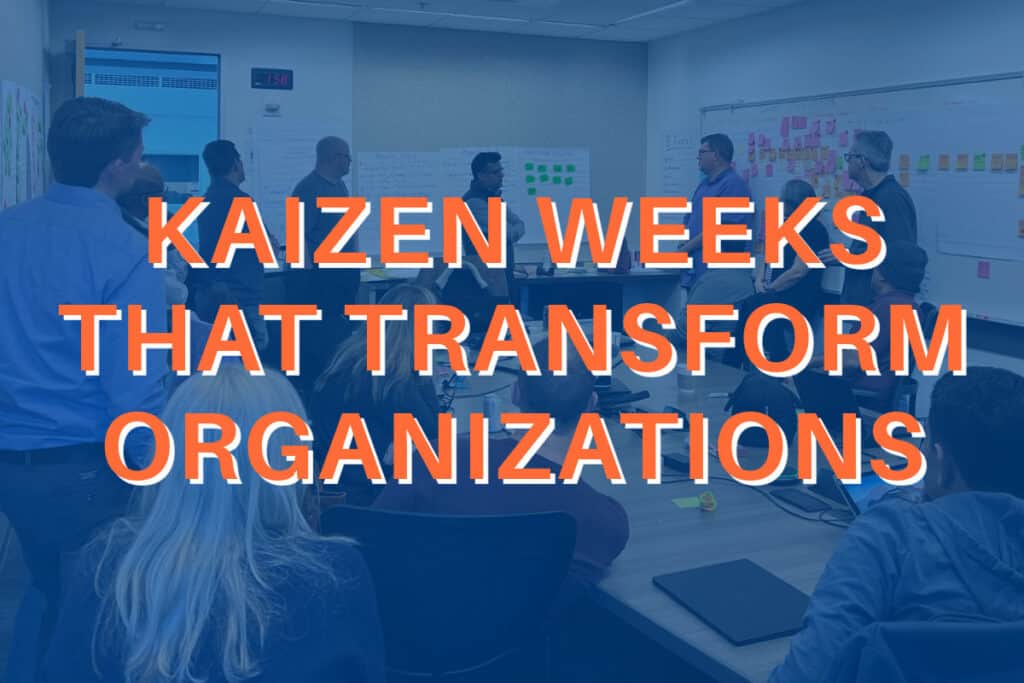
Most operations leaders have participated in some form of a Kaizen event. They have spent time in conference rooms surrounded by process maps and sticky notes. They have identified opportunities, discussed future-state ideas, and left the week energized about what could be possible.
Yet many leaders have also experienced the opposite. The event generated enthusiasm for a few weeks, but eventually, daily pressures returned, priorities shifted, and very little changed.
This reality has caused some organizations to become skeptical of Kaizen Weeks altogether. The problem, however, is rarely the Kaizen methodology itself. The organizations that achieve the greatest results understand that the event is not the destination. It is simply the mechanism that creates visibility, alignment, and momentum for the work that follows.
The most successful Kaizen Weeks do much more than improve processes. They strengthen teams, develop leaders, and build the organizational capability required to sustain continuous improvement over time.
What Is a Kaizen Week and Why Do Organizations Use Them?
A Kaizen Week is a focused improvement event that brings together cross-functional teams to evaluate a process, identify waste, and implement meaningful changes. Rooted in Lean principles, these events create dedicated time for teams to step away from daily firefighting and analyze how work actually flows through the organization.
For many companies, this type of structured pause is difficult to create internally. Operational demands consume attention, and improvement work is often postponed in favor of more immediate priorities. A Kaizen Week creates the opportunity to slow down long enough to improve.
Participants typically include leaders and employees from multiple functions because process problems rarely exist within a single department. Delays, rework, communication gaps, and bottlenecks often occur at the handoffs between teams. Bringing the right people together creates visibility into the entire system rather than isolated pieces of it.
While the tools used during these events are important, the conversations they create are often even more valuable.
Common Reasons Leaders Hesitate to Launch a Kaizen Week
By the time many organizations consider a Kaizen Week, they have already formed opinions based on previous experiences, competing priorities, or assumptions about what these events involve. Some concerns are rooted in resource constraints, while others stem from unsuccessful Lean efforts in the past. Below are four of the most common concerns we hear from leaders and why those concerns deserve thoughtful discussion.
“We Don’t Have Time for a Kaizen Week”
This is one of the most common concerns leaders express. While pulling people away from daily responsibilities can feel risky, many organizations underestimate how much time is already being lost to inefficiencies that have become normalized. A well-executed Kaizen Week creates the opportunity to eliminate those frustrations and reclaim valuable capacity.
“Our Team Already Knows the Problems”
In many cases, they do. However, most individuals only see the portion of the process they directly touch, and few people have visibility across the entire workflow. Bringing cross-functional teams together often reveals that isolated issues are actually symptoms of larger systemic problems.
“We’ve Tried Lean Before”
Previous improvement efforts that failed to sustain momentum can create understandable skepticism. More often than not, unsuccessful Lean initiatives stem from a lack of follow-through or leadership reinforcement rather than flaws in the methodology itself. When supported by strong leadership systems, continuous improvement becomes sustainable.
“Consultants Will Tell Us What We Already Know”
The people closest to the work usually understand the process better than anyone. Effective Kaizen facilitators do not arrive with predetermined answers; they provide the structure and outside perspective necessary to help teams uncover opportunities and build the capability to sustain improvement long after the engagement ends.
The Real Purpose of a Kaizen Week Is Bigger Than Process Improvement
Most organizations begin a Kaizen Week expecting process improvements. They often leave with something much more valuable.
Cross-functional teams develop stronger relationships. Silos begin to break down. Leaders gain a deeper understanding of operational challenges. Employees feel heard because they have an opportunity to contribute directly to solutions. Many future leaders emerge during these events because they demonstrate problem-solving ability, collaboration, and ownership.
These outcomes are difficult to quantify, yet they frequently become some of the most significant long-term benefits. Processes improve, people develop, cultures strengthen, and organizations become better equipped to solve future problems together.
Sustainable Continuous Improvement Requires More Than a Single Event
The organizations that achieve the greatest results from Kaizen Weeks understand that improvement does not end when the sticky notes come down. The event simply creates the foundation.
Sustainable transformation occurs when organizations combine process improvement with leadership systems, accountability, Daily Management, and a commitment to continuous learning.
At NEXT LEVEL Partners, our goal during a Kaizen Week extends far beyond helping teams identify waste or redesign processes. We believe the greatest value comes from equipping leaders and teams with the tools, structure, and confidence necessary to sustain improvement long after the engagement ends.
That philosophy shapes how we facilitate every event.
Rather than creating dependency, our practitioners work alongside the people closest to the work. Teams are actively involved in identifying opportunities, challenging assumptions, and building solutions together. Leaders gain practical experience in how to facilitate problem solving, reinforce accountability, and maintain momentum once the event is complete.
The objective is not simply to deliver a successful week. It is to leave behind a stronger organization. Over time, this approach creates something much more powerful than a completed action plan. It creates internal capability. Teams become better problem solvers. Leaders become more effective coaches. Continuous improvement becomes embedded in the culture rather than dependent on outside support. Because ultimately, the most valuable outcome of a Kaizen Week is the organization’s ability to continue improving after everyone goes back to work.
Whether your organization is looking to reinvigorate existing Lean efforts, launch continuous improvement for the first time, or recover from a disappointing experience with a previous consultant, NEXT LEVEL Partners would welcome the opportunity to help. Because a Kaizen Week should do more than improve a process. It should strengthen the people and systems responsible for improving everything that comes next.
Want to explore what’s possible for your organization? Let’s talk.